
📋 Project Summary
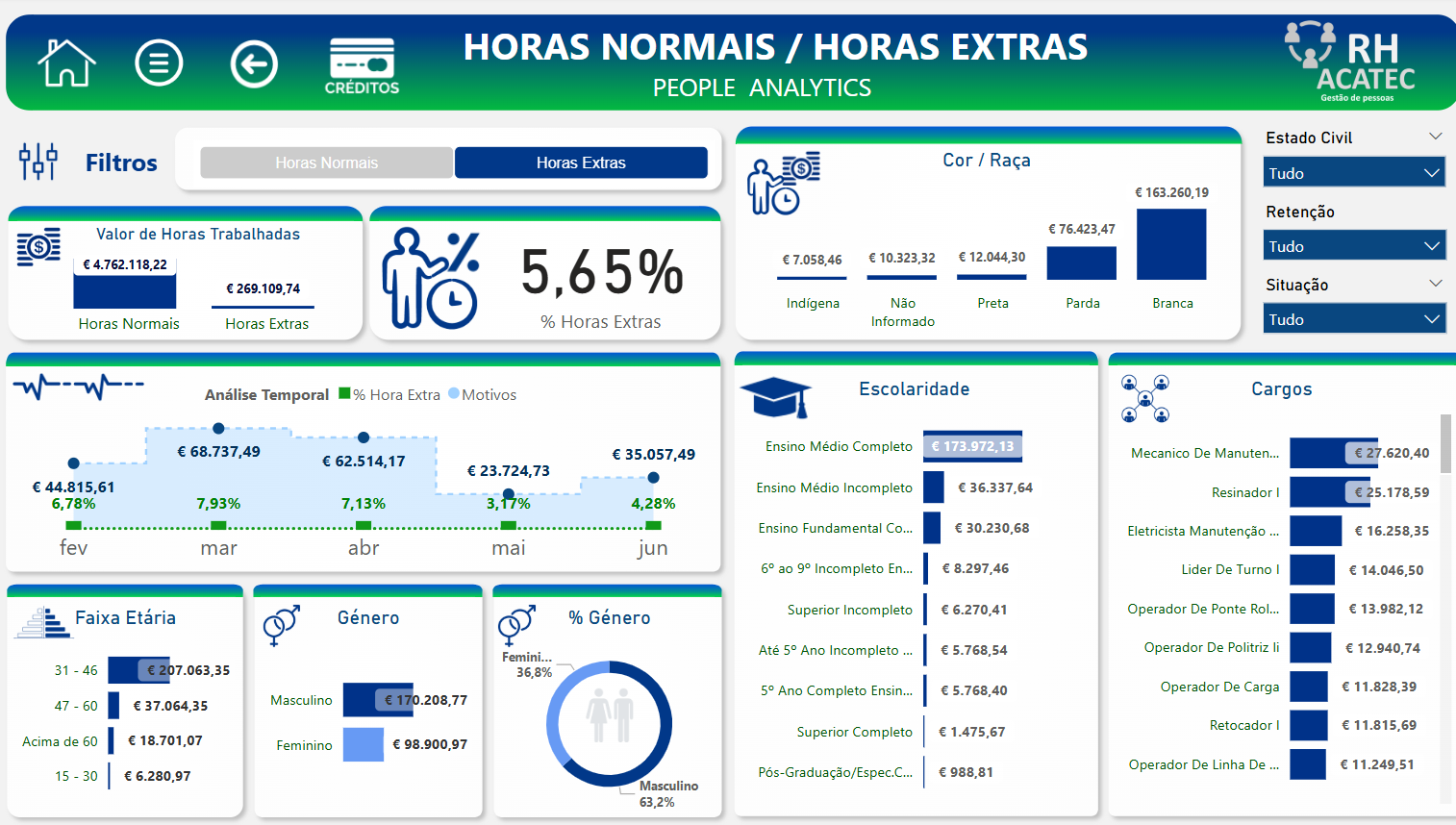
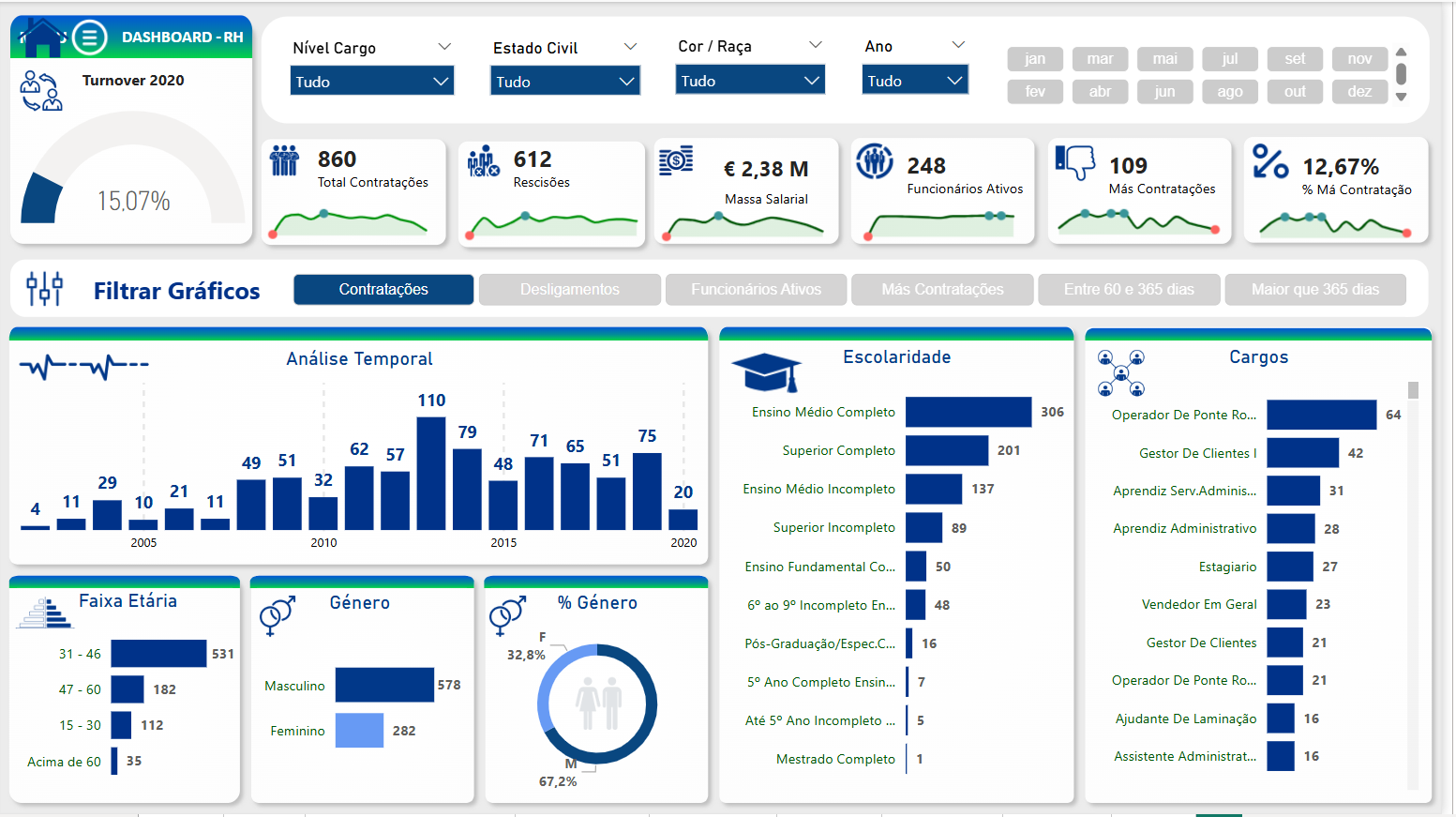
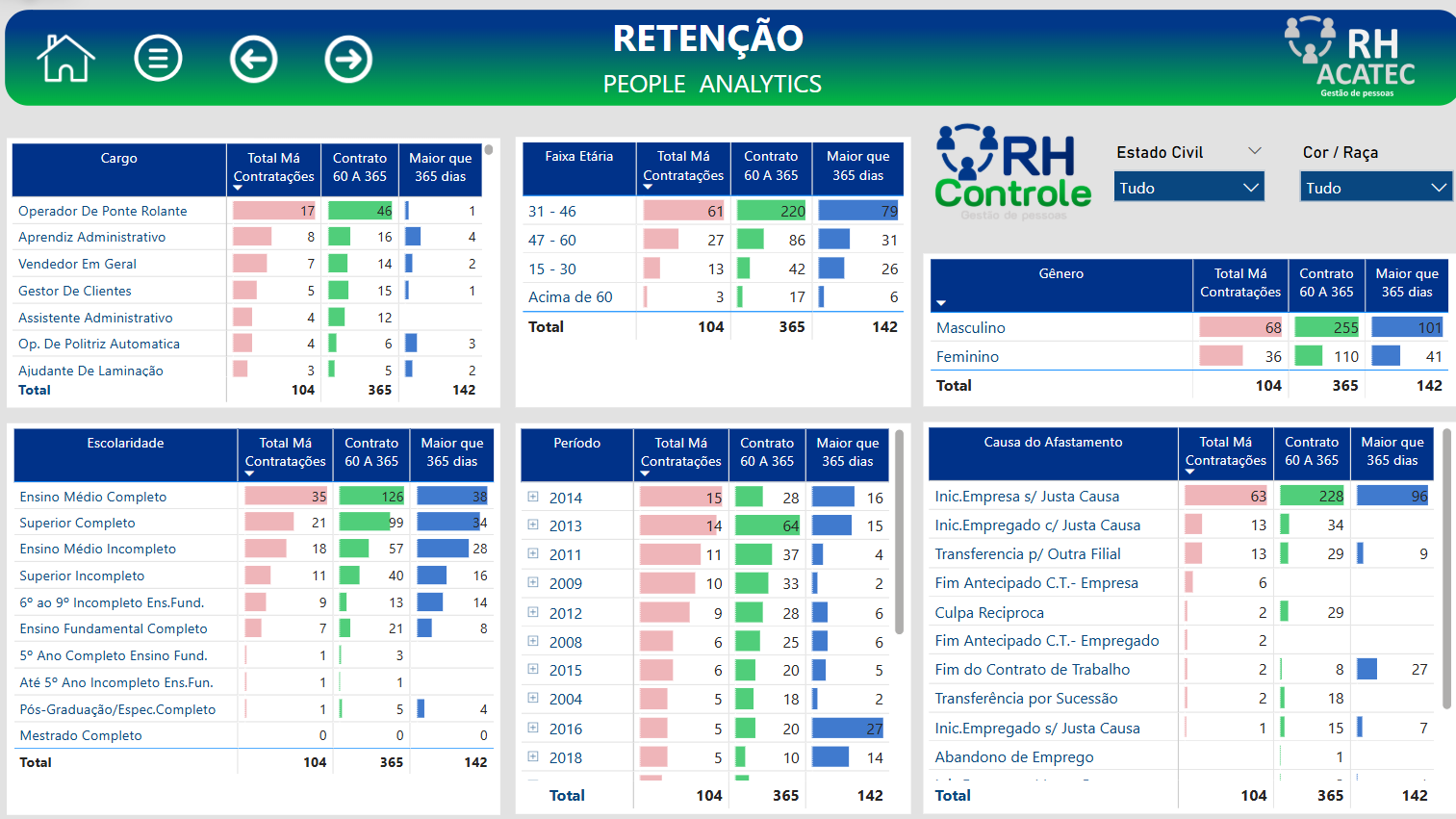
Development of a complete People Analytics solution, focused on analyzing turnover, retention, absenteeism, hours worked and salary mass.
🎯 Goals
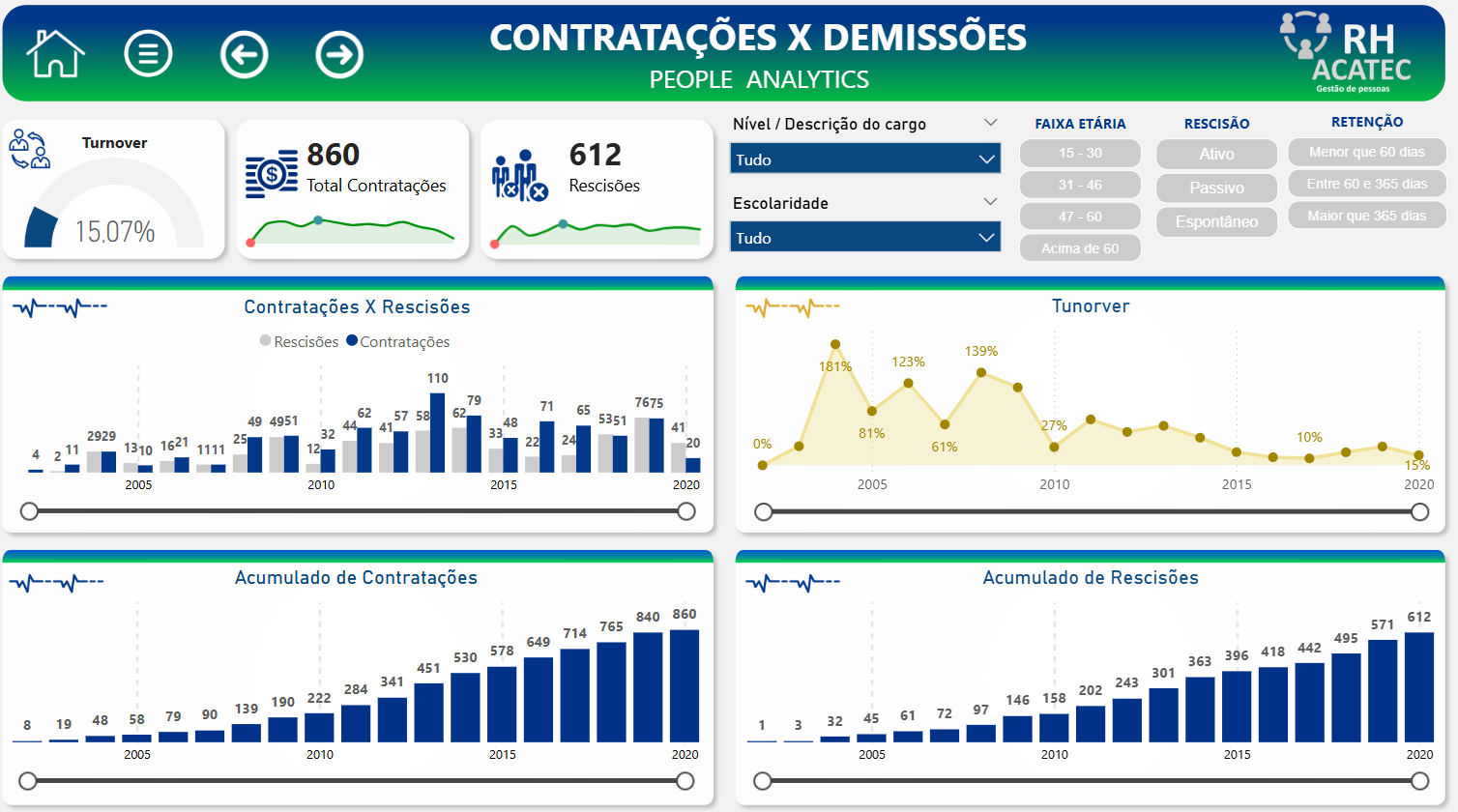
- Analyze the history of hirings, dismissals and internal movements.
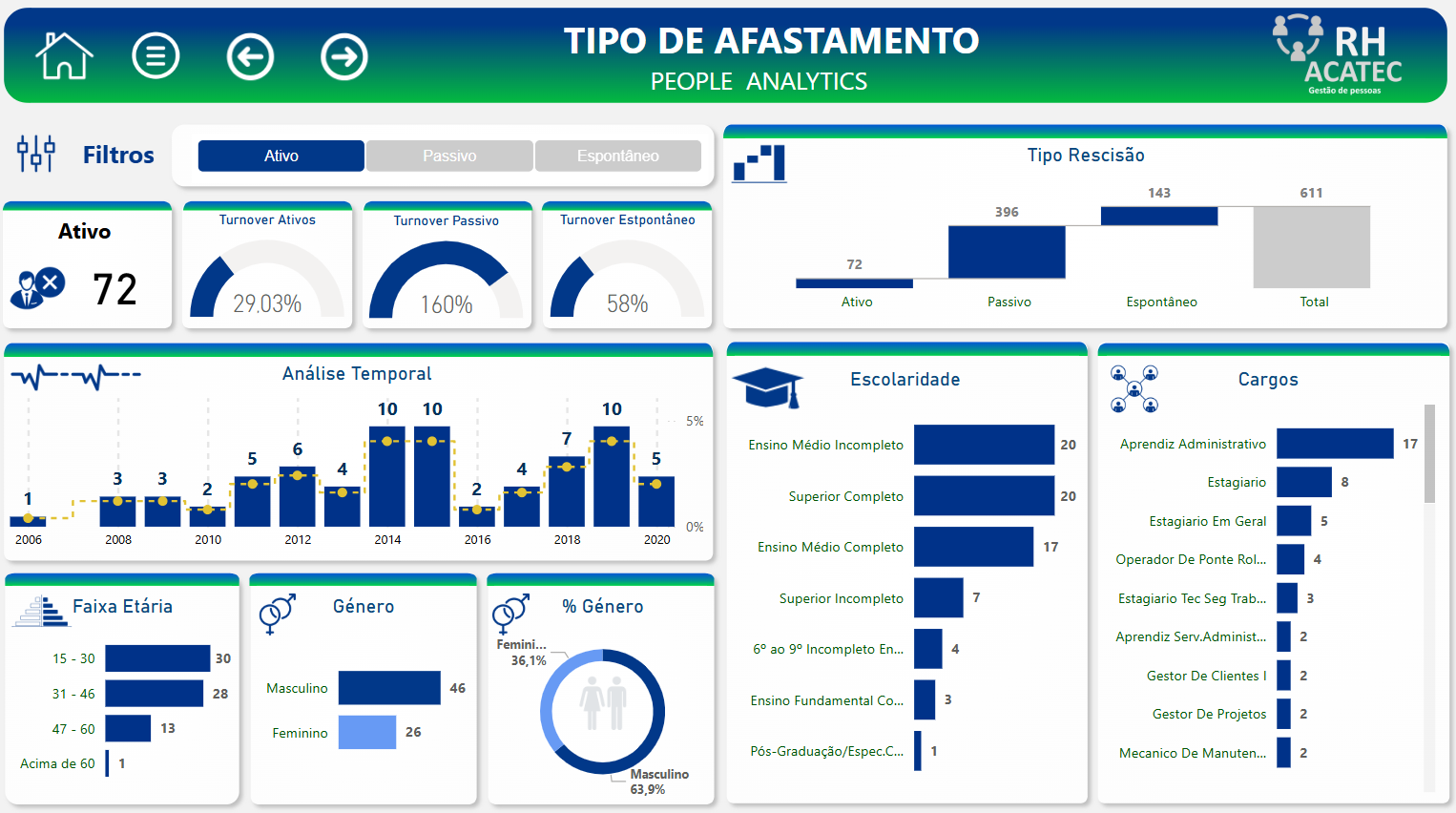
- Identify turnover patterns by age group, gender, education level and position.
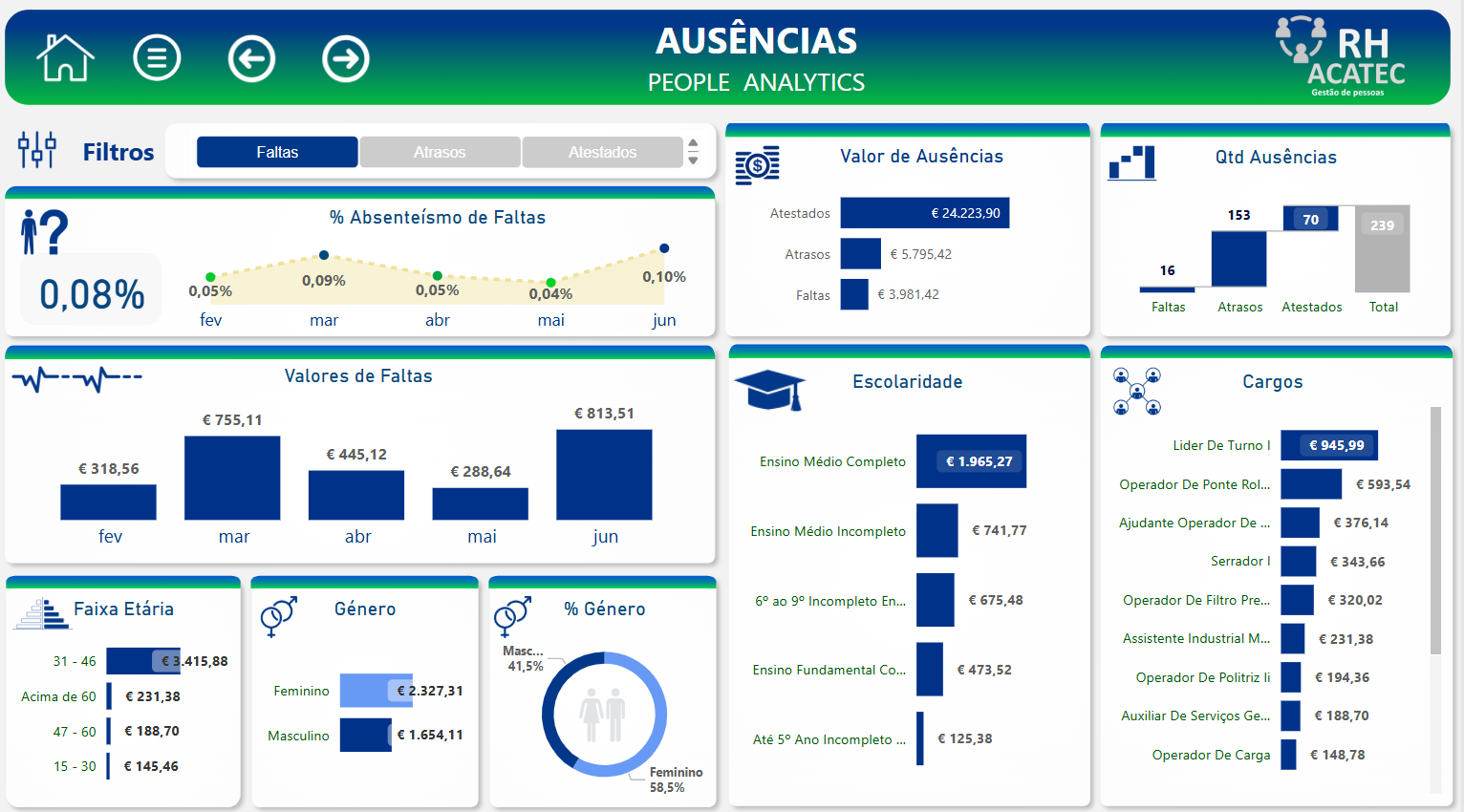
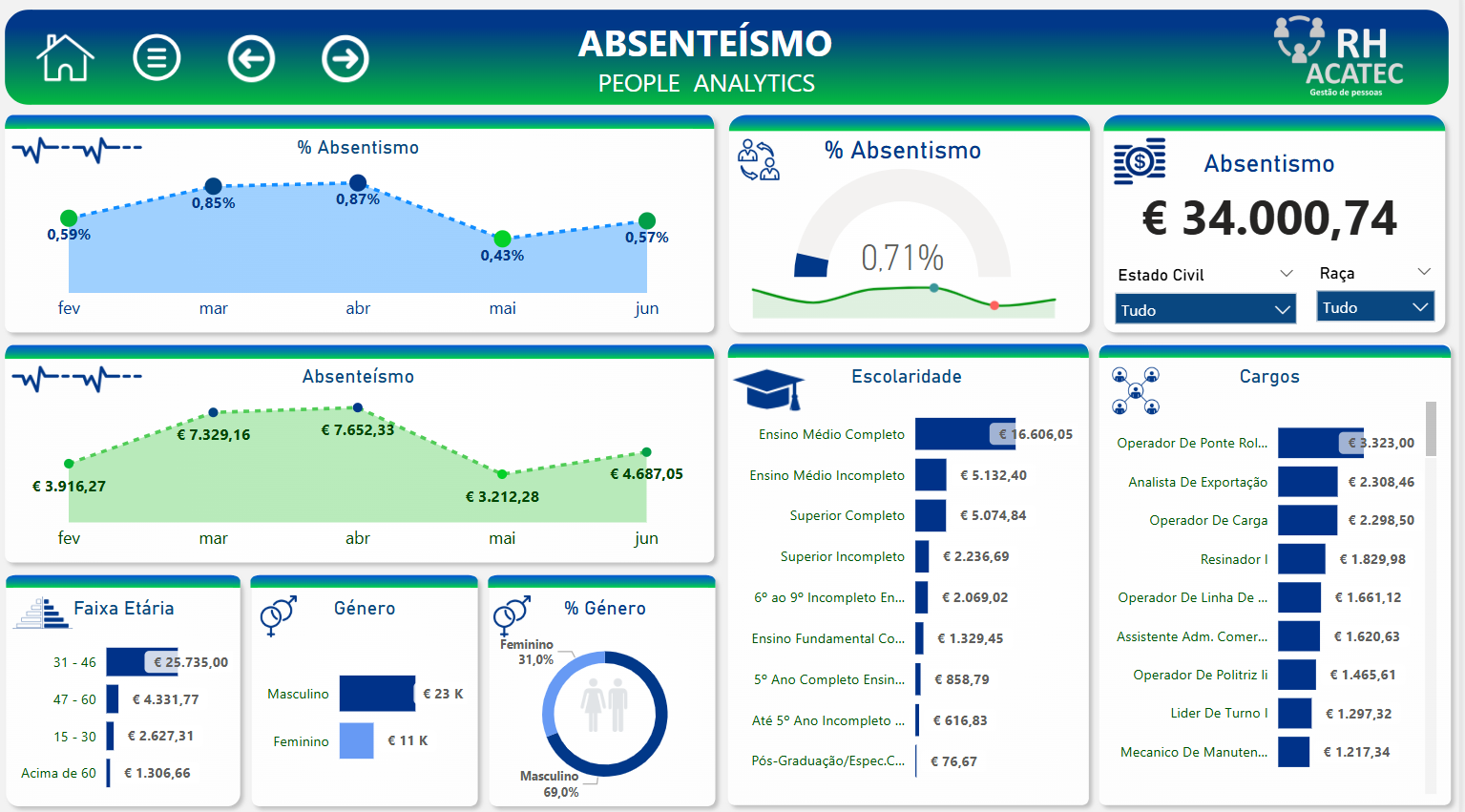
- Evaluate the financial impact of absenteeism and absences.
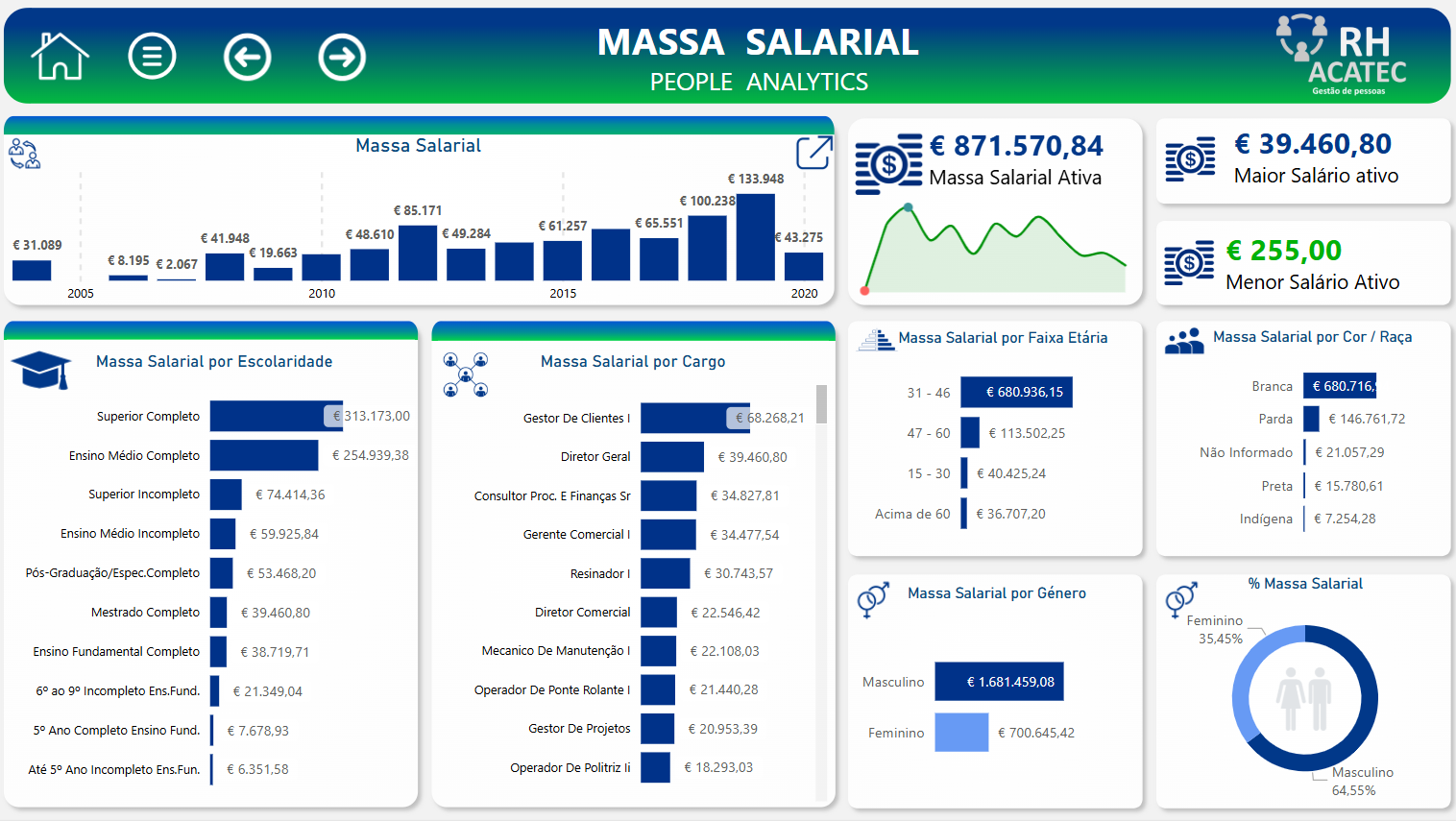
- Monitoring the distribution of the wage bill in different groups.
- Supporting talent retention strategies based on data.
🛠️ Methodology
- Gathering and preparing HR data: hiring, firing, salaries, absenteeism and hours worked.
- Data processing (cleaning, normalization and integration between sources).
- Building dynamic dashboards in Power BI, with filters by position, age, education and race/color.
- Exploratory analysis and visualization of trends in turnover, absenteeism and salary distribution.
- Calculation of strategic KPIs: turnover rate, % of bad hires, % of overtime, among others.
📈 Main Results
- Clear visualization of turnover rates and their variations over the years.
- Identifying the positions and profiles most prone to turnover.
- Complete analysis of the wage bill by gender, age group, education level and race.
- Evaluation of the main reasons for dismissal and the impact on retention.
- Estimativas de custos financeiros associados ao absentismo.
🚧 Difficulties Overcome
- Overcoming gaps in historical data and standardizing categorical variables.
- Integration of different databases for a 360º view of the workforce.
- Optimization of the dashboard model to facilitate analysis by non-technical users.
- Technologies and Tools
- Power BI - Interactive dashboards and reports.
- Python — Data pre-processing (pandas, numpy).
- SQL - Extracting and manipulating data in relational databases.
🔍 Final Reflection
This project shows how data analysis can strengthen people management strategy, promoting fact-based decisions and improving talent retention.
Transforming data into useful information is the first step towards building more efficient, humane and sustainable organizations.
 Português
  English